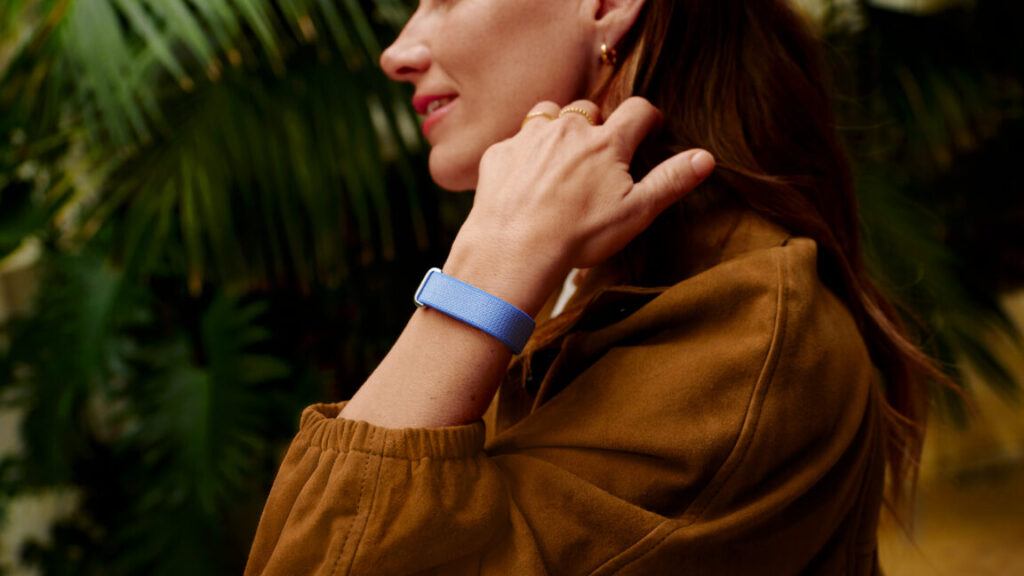
Wearables have really come full circle. The early Fitbits didn’t have screens, but the move to smartwatches put a screen on everyone’s wrist. Now, devices like Whoop and Hume are designed as data trackers first and foremost without so much as a clock. Google’s newest wearable jumps on that trend: The Fitbit Air doesn’t have a screen, but it does have a suite of health sensors that pipe data into the new Google Health app. And if you want, Google has a new AI-powered health coach in the app ready to tell you what that data means (maybe). The Fitbit Air itself is a small plastic puck about 1.4 inches long and 0.7 inches wide. It slots into various bands that hold the bottom-mounted sensors against your wrist. There’s no display pointing upward, so the entire device is covered by the fabric or plastic of the band. It’s a streamlined and potentially stylish look—in uncharacteristic fashion, Google has plenty of colors and style options available, including a special-edition Steph Curry version. You may have heard chatter about Curry being seen teasing a new screenless Fitbit, and this is it. Active bands. Google Active bands. Google Performance Loop bands. Google Performance Loop bands. Google Elevated Modern bands. Google Elevated Modern bands. Google Performance Loop bands. Google Elevated Modern bands. Google Smartwatches never quite became a must-have device—plenty of people have them, but we don’t all wear them all the time because they need to be charged often and aren’t always very comfortable. The screenless Fitbit Air doesn’t have those issues. Google says it lasts about a week on a charge, and it does that while collecting continuous health data. It can even store a day of data without being connected to your phone. While the Pixel Watch is very comfortable for a smartwatch, Google still wants to make it easier for people to keep collecting data all day and night. The company says that product testers rated the Air as more comfortable than competing devices, so you may actually be willing to wear it to bed for sleep tracking. You don’t have to choose between these devices, either. You can keep a Pixel Watch and Fitbit Air paired with your phone and wear whichever one you want over time. This capability will come to more wearable devices in the near future, too.
Google unveils screenless Fitbit Air and Google Health app to replace Fitbit