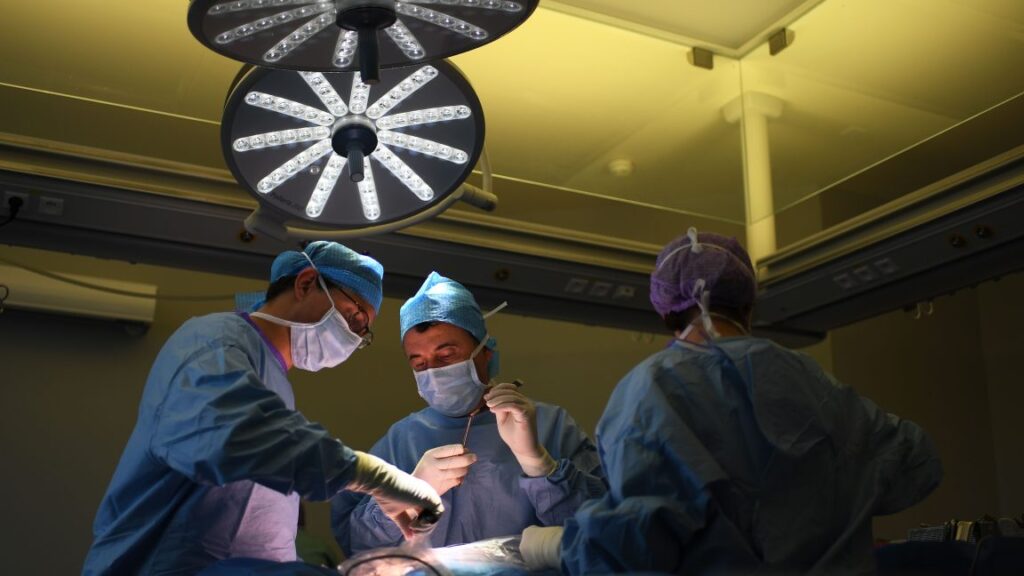
A Florida grand jury has indicted surgeon Thomas Shaknovsky on charges of second-degree manslaughter for the 2024 death of a patient whose surgical procedure was horrifyingly botched. That patient was 70-year-old William Bryan of Alabama, who was scheduled in August to have his spleen removed in a minimally invasive (laparoscopic) procedure. But instead, Shaknovsky opened Bryan’s abdominal cavity, severed his largest vein with a surgical stapling device—which led to his death—and cut his healthy liver from his body as he bled out, according to an investigation by the state health department. Bryan’s spleen was left untouched. The second-degree manslaughter charge stems from an investigation by the Walton County Sheriff’s Office, which coordinated with the Office of the State Attorney First Judicial Circuit and additional state and medical authorities. “The Grand Jury has spoken, and our responsibility is to ensure the charges are carried out through the proper legal process,” Walton County Sheriff Michael Adkinson said in an announcement of Shaknovsky’s indictment. ” Our thoughts remain with the victim’s family and their unspeakable loss.” Shaknovsky was arrested Monday morning and has since been released on bond. He faces up to 15 years in prison if convicted. While the indictment is new, the events that led to Bryan’s death were revealed almost immediately. In September 2024, State Surgeon General Joseph Ladapo ordered an emergency suspension of Shaknovsky’s license following an investigation by the state health department that detailed how it happened. Horror story Investigators found that the case began just a few days before Byran’s death. At the time, he and his wife were visiting Florida from their home state of Alabama. Bryan developed pain in his upper left abdomen and went to the emergency department of a hospital in Miramar Beach, where Shaknovsky was the on-call general surgeon. Imaging suggested Bryan’s spleen might be enlarged, and there was blood in the membrane that lines the abdominal cavity, though there was no active hemorrhage.
Florida surgeon charged with killing man after removing liver instead of spleen